Your local, professional, and reliable partner for all your tree service needs.
Contact Info
Your local, professional, and reliable partner for all your tree service needs.
Contact Info
When a tree crashes into your home at 3 AM, every second counts. Here's your step-by-step guide to emergency tree removal in Cherokee, GA. Because your house isn't supposed to have a sunroof made of oak.
Before you grab your phone or start assessing the “new decor,” you need to get everyone to safety. That includes the dog, the cat, and that one kid who sleeps through everything.
If the tree punctured your roof, don’t assume the structure is stable. Even if it looks like a “small” branch from inside, you have no idea what’s compromised above you. Your house is currently playing a very high-stakes game of Jenga, and the tree just pulled a structural block. Move everyone to the most sound part of your home, away from the impact zone.
Listen for sounds that signal bigger problems. Hissing could mean a gas line rupture. Crackling or buzzing means electrical issues. The smell of gas means you evacuate immediately and call 911 from outside. If you see downed power lines, stay at least 50 feet away—unless you’re looking for a very permanent and very shocking career change.
If anyone is injured, if you smell gas, or if you see sparking wires, your first call is 911. Fire departments respond because these situations involve immediate life safety risks. They aren’t there to trim your hedges; they’re there to make sure your house doesn’t turn into a bonfire.
The fire crew will secure the scene, check for leaks, and determine whether it’s safe for you to stay. They’re not going to remove the tree, but they will make sure the situation isn’t going to get worse while you figure out next steps.
Once emergency services clear the scene and confirm there’s no immediate danger, that’s when you call an emergency tree removal company. If the tree didn’t cause major structural damage and there are no utility hazards, you can skip 911 and go straight to us. But when in doubt, call 911 first—better to have the fire department show up and do nothing than to have your house do something “explosive” because you didn’t call.
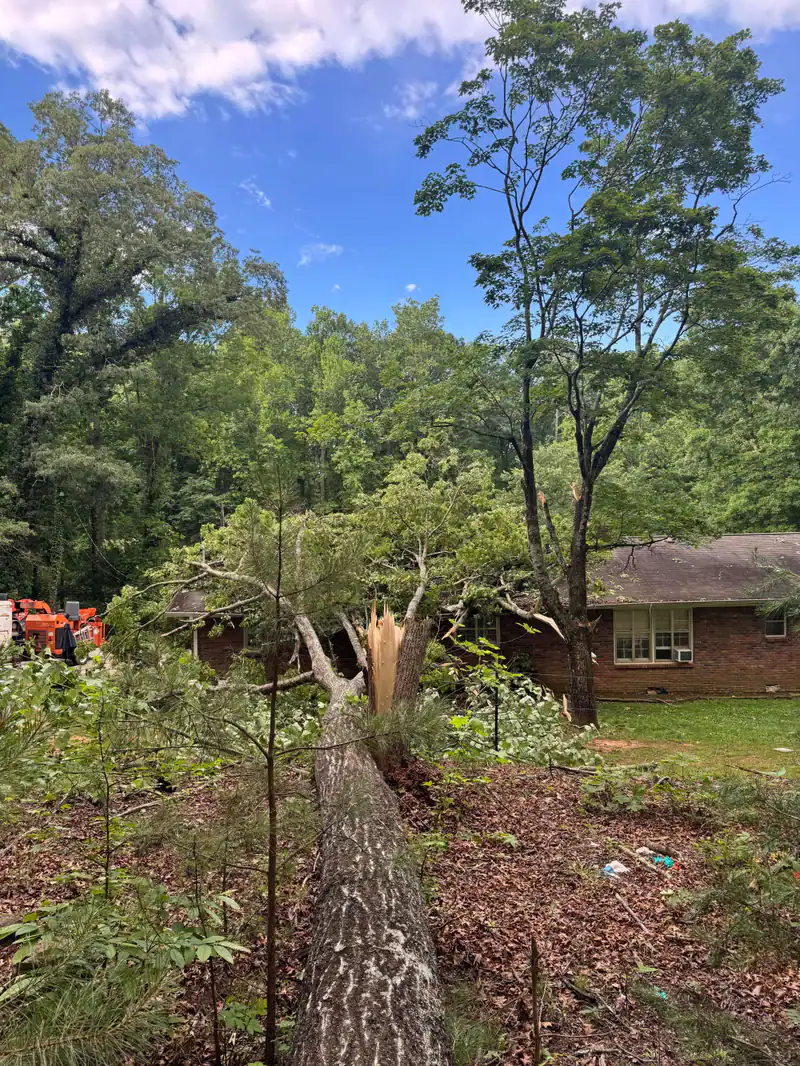
Once everyone is safe, grab your phone and start documenting everything. Your insurance claim depends on this evidence, and you want to capture it before anyone moves the tree or starts cleanup. Think of yourself as a crime scene investigator, but the “perp” is a 60-foot pine.
Take wide shots showing the entire tree and where it’s sitting. Then move in for close-ups of every point of impact. The roof, the siding, broken windows—photograph it all from multiple angles. If you can do it safely, photograph the base of the tree too. If the trunk shows rot, document that. Insurance adjusters are like detectives; they want to know if this was an “Act of Nature” or “Act of Homeowner Neglect.”
Call your insurance company immediately. Most policies cover tree damage from wind or ice. They typically won’t cover it if the tree was clearly dead and you ignored it for three years. Keep every receipt. If you need to tarp the roof or board up windows, save those receipts. Your insurer needs documentation to reimburse you, and “I promise I spent $200 on a tarp” usually doesn’t cut it.
Want live answers?
Connect with a Tree Service 4 U expert for fast, friendly support.
When you’re staring at a tree on your roof in your pajamas, you don’t have time to interview six candidates. You need someone who answers the phone, shows up fast, and doesn’t look like they’re making it up as they go.
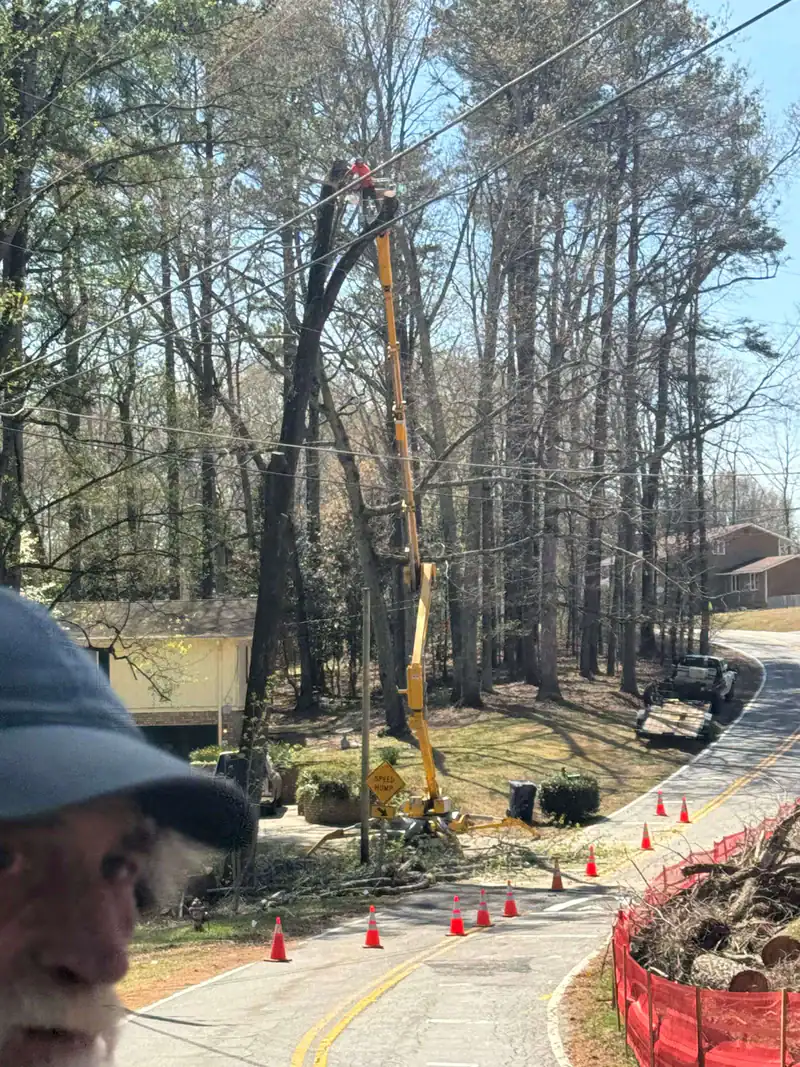
They need to be licensed and insured. Full stop. If they can’t confirm liability insurance and workers’ comp, hang up. You do not want to be the one paying for a contractor’s hospital bill because he fell off your roof while trying to save it. They also need the right equipment—cranes, bucket trucks, and a crew that knows how to rig a tree so it doesn’t do “Roof Damage 2: The Sequel” during the removal process.
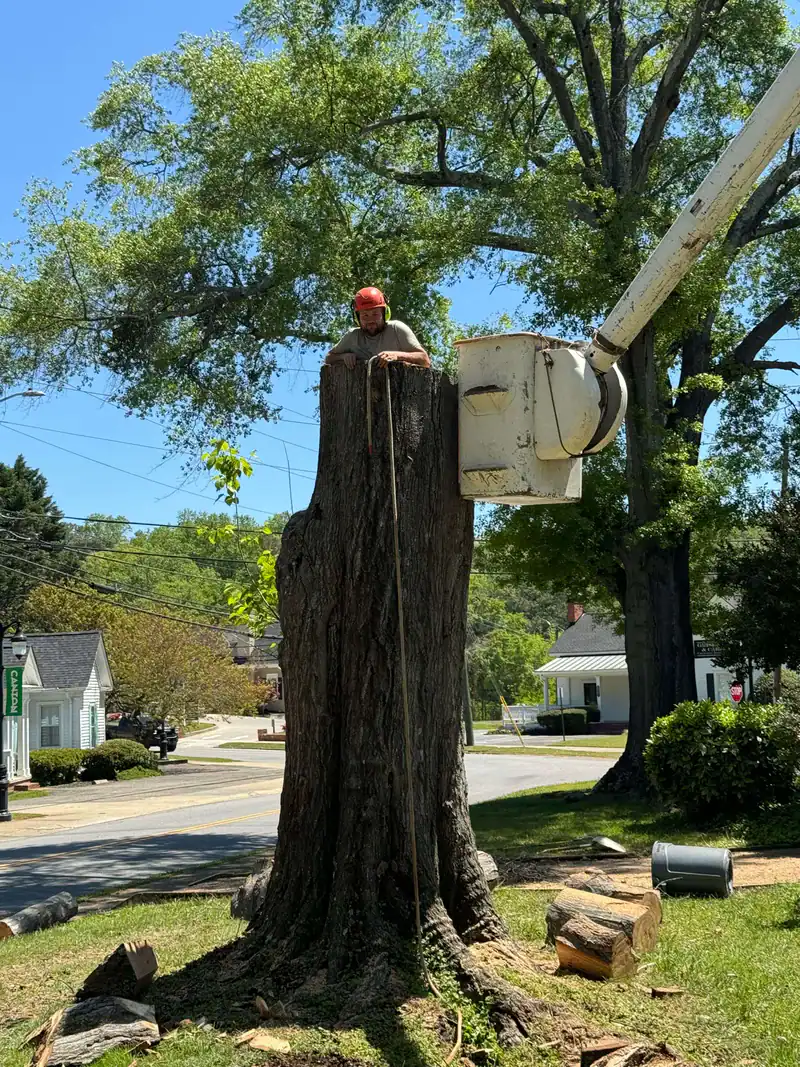
Emergency tree removal is a delicate surgery. Our crew will assess the weight distribution first. Removing a tree from a roof isn’t as simple as “cutting it up.” We have to remove it in sections, often using cranes to lift pieces off so they don’t crash further into your living room.
We also handle immediate damage control. That means tarping holes to prevent rain from finishing what the tree started. Expect the process to take several hours for a large tree. It’s not as fast as a pit stop at the Daytona 500, but we’re a lot faster than waiting for the tree to decompose on its own. Throughout the process, we’ll keep you informed and coordinate with your insurance adjuster if they’re on-site.
Let’s talk about money, because you need to know what to expect. Standard tree removal in Cherokee County typically runs between $735 and $2,000. Emergency removal costs more—sometimes 50% more. Why the premium? Because the crew is dropping their 3 AM pizza to come save your house.
If a tree hits your house, insurance usually covers the removal up to your policy limits, often $500 to $1,000, plus the repairs to your home. If the tree just fell in your yard without hitting anything? That’s usually on your dime. Get a written estimate before work begins; your insurance company will want that anyway.
Once the tree is gone, your work isn’t quite done. You need a licensed roofing contractor to assess the full extent of the damage. What looks like a “small hole” might involve compromised rafters or flashing.
Follow up with your insurance company regularly. Claims can take time, especially after a big storm. Also, consider having us evaluate the other trees on your property. If one tree decided to take a nap on your roof, its neighbors might be thinking about doing the same thing.
If you’re facing a tree emergency right now, don’t wait. We provide 24/7 emergency tree removal in Cherokee, GA. Whether it’s storm cleanup or dangerous tree removal, we handle it with the urgency your 3 AM wake-up call deserves.
Summary:
Share: