Your local, professional, and reliable partner for all your tree service needs.
Contact Info
Your local, professional, and reliable partner for all your tree service needs.
Contact Info
Your trees are telling you something. Overgrown branches, dense canopies, and dead limbs aren't just aesthetic issues—they're warning signs that could cost you. Trees don't send "heads up" texts, so you have to notice the signs.

Let’s start with what most people get wrong. Tree trimming isn’t just a cosmetic “haircut” you do when the neighbors start side-eyeing your property over the fence. It’s a safety measure and a health intervention rolled into one.
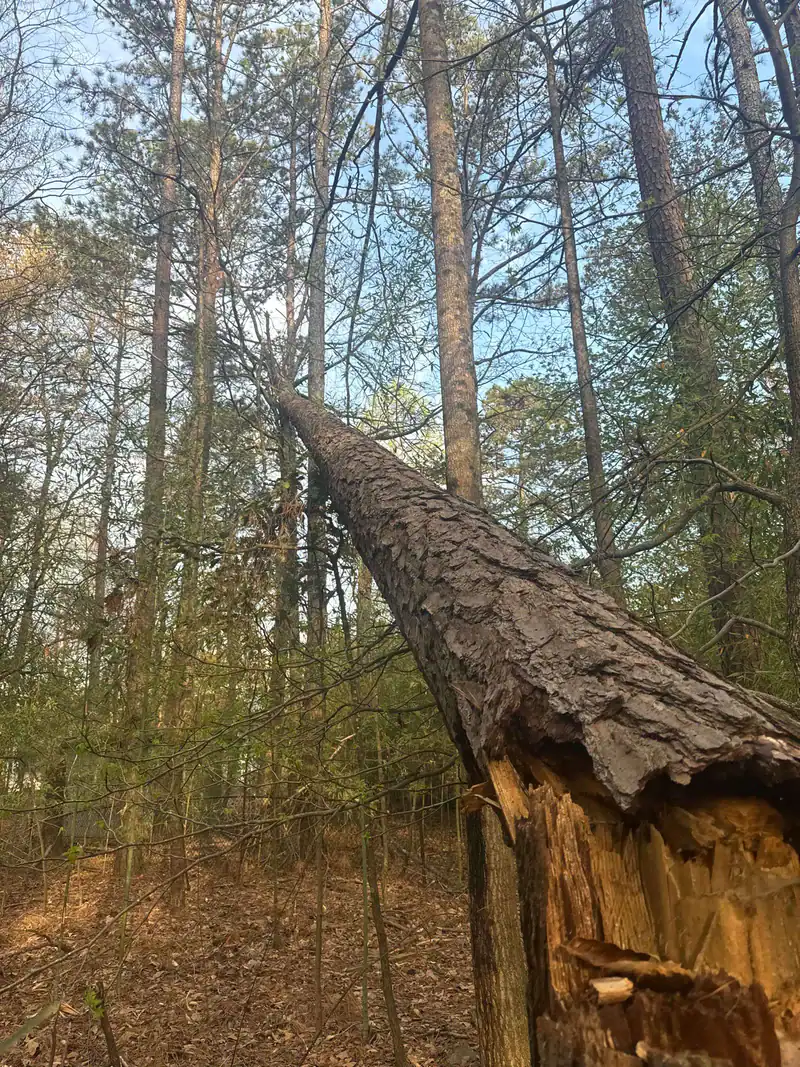
Dead or diseased branches don’t just “heal.” They sit there, getting weaker and more brittle, until wind, ice, or even just a particularly heavy squirrel brings them down. Removing those branches before they become projectiles is the most straightforward reason to trim.
But there’s more to it: overgrown trees with dense canopies trap moisture and block airflow, which is basically an “Open for Business” sign for pests and disease. Trimming opens up the canopy, letting light and air reach the interior branches. It gives your tree a fighting chance to stay healthy instead of becoming a giant, leafy science experiment. It also reduces the weight load on major limbs, which means less risk of breakage during Georgia’s unpredictable “wait five minutes and the weather will change” storm season.
Here’s a number that matters: well-maintained trees can increase your property value by nearly 20%. That’s a serious return on investment. On the flip side, neglected trees scraping your roof or a yard that looks like a set from a horror movie will absolutely drag down your home’s appeal. “Rustic” is great for a coffee table; it’s less great for a tree that looks like it’s plotting against your mailbox.
Beyond the dollars, there’s the liability. A branch that falls and smashes your neighbor’s fence isn’t just an inconvenience—it’s a legal and financial headache. If that branch was visibly dead and you did nothing, your insurance company might decide to “be elsewhere” when the claim comes in. Professional trimming removes those hazards before they become insurance adjusters.
Trimmed trees are stronger trees. When you remove crossing limbs and deadwood, you’re helping the tree focus its energy on healthy growth. You’re also improving its structure, making it more resistant to wind and ice damage. That’s smart for the tree, and it’s even smarter for anyone who prefers their roof without any “natural accents” added by gravity.
Skipping tree trimming doesn’t just make your yard look wild. It means you’re setting yourself up for bigger, more expensive problems down the road. Trees don’t stop growing just because you’re busy. Over time, neglect compounds. A tree that could’ve been fixed with a few strategic snips now needs major surgery—or complete removal. And let’s be real: removal costs a lot more than a haircut.
Neglect also invites disease and pests. Dead branches and dense canopies are perfect homes for fungi and beetles. Once disease gets into the trunk, you’re not just trimming—you’re trying to save the tree’s life. Sometimes the tree wins, and sometimes the woodchipper wins.
Then there’s storm damage. Cherokee, GA gets its share of high winds and heavy rain. If your trees are compromised by overgrowth or weak branches, they’re the first to “opt out” of standing upright. Emergency tree removal after a storm is expensive, stressful, and usually happens at 3:00 AM. Regular trimming dramatically reduces that risk so you can actually sleep through the next thunderstorm.
Want live answers?
Connect with a Tree Service 4 U expert for fast, friendly support.
Timing is everything. Trim at the wrong time, and you can stress the tree or invite disease. Trim at the right time, and the tree heals quickly. For most trees, the best time to trim is during the dormant season—late fall through early spring. The tree isn’t actively growing, pests are taking a nap, and since there are no leaves, we can actually see what we’re doing.
Exceptions to the Rule: If you have a spring-blooming tree like a Dogwood, wait until right after it blooms. Trimming too early is a great way to make sure you have a very green, very flower-less spring. For “bleeders” like Maples, late winter pruning can result in a lot of sap, which looks like the tree is crying. It’s not sad; it’s just physics, but it can be a bit of a sticky mess.

You don’t need a PhD in Arboriculture to spot the red flags.
Dead Branches: In summer, they’re the ones with no leaves. In winter, they’re brittle and snap like a dry pretzel. If it looks like a “widowmaker,” it probably is.
Crossing Branches: When branches rub together, they wear away the bark. It’s like your tree is trying to start a fire with its own limbs—one of them has to go.
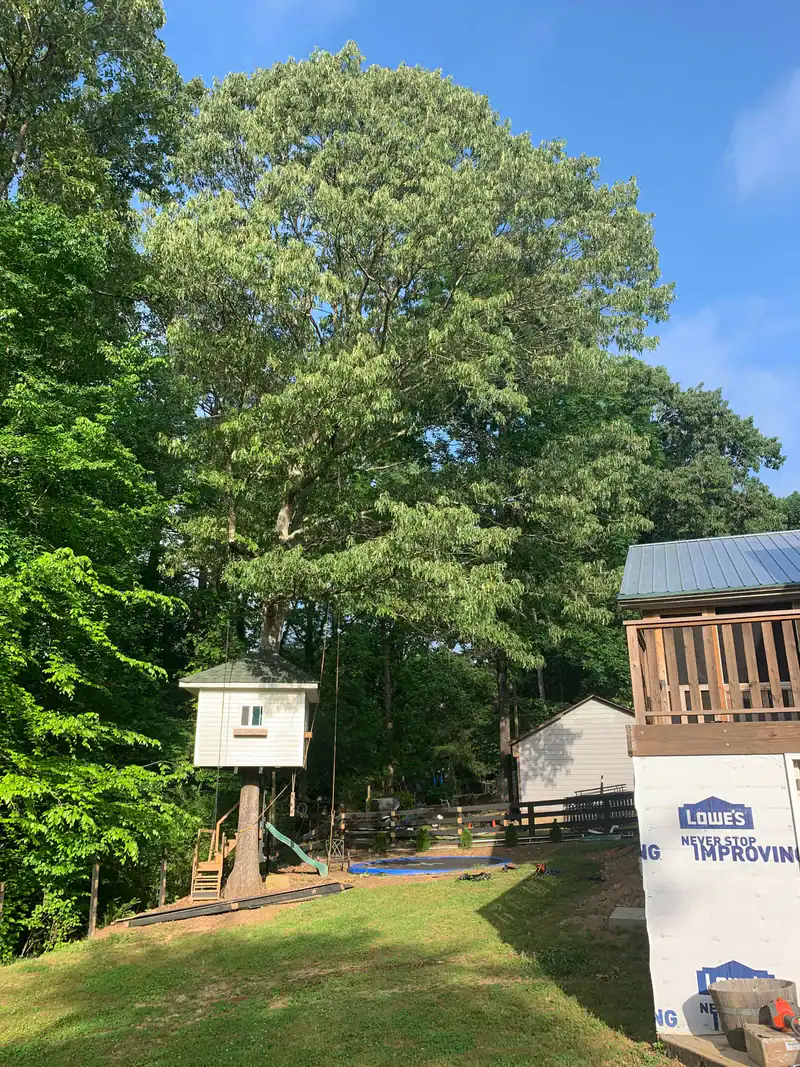
Overgrown Canopies: If you stand under your tree and can’t see the sky at all, it’s too dense.
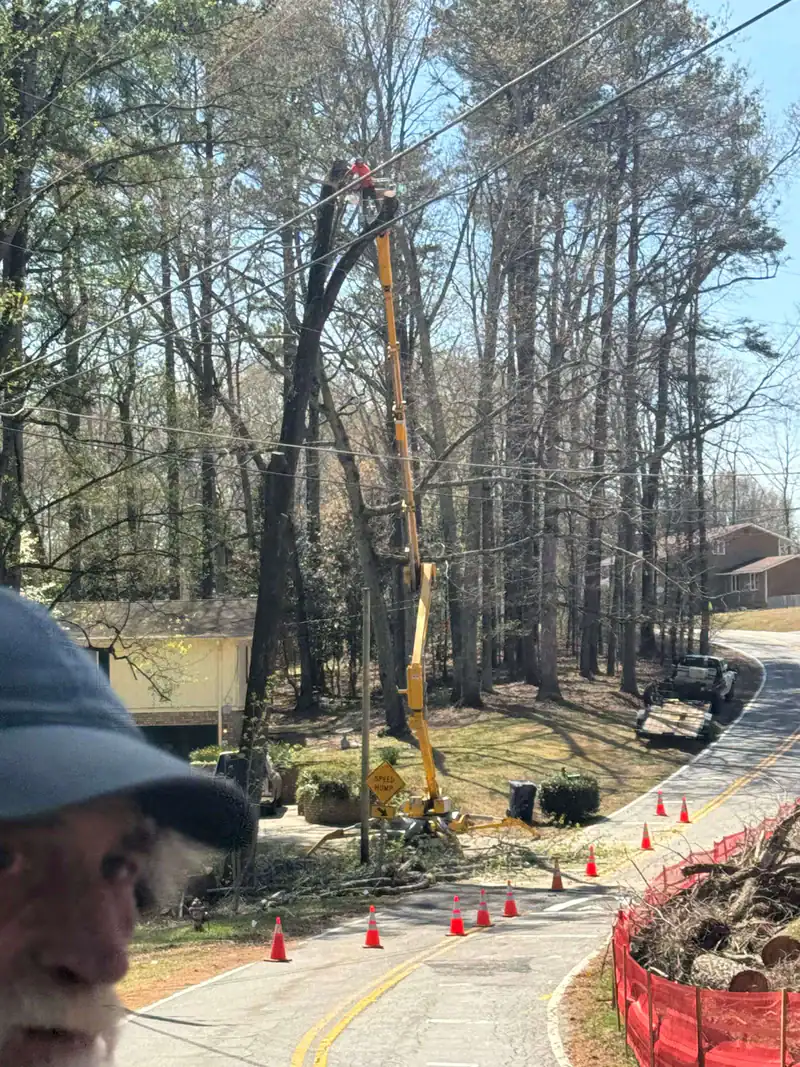
Obstructions: Branches scraping your siding or hanging over the power lines need to go. If you can hear the tree “knocking” on your window at night, it’s not a ghost; it’s a pruning opportunity.
The idea of saving a few hundred bucks by doing it yourself is tempting. You have a ladder, a chainsaw, and a “can-do” attitude. What could possibly go wrong? A lot, actually. Every year, thousands of homeowners end up in the ER because ladders tip or branches fall in directions that defy the laws of physics. And that’s before you factor in the risk of cutting into a power line. Unless you’re looking for a very permanent and very shocking career change, leave the power lines to the pros.
Improper cuts also kill trees. “Topping” a tree (cutting off the top) is a cardinal sin in tree care. It weakens the structure and encourages weak regrowth that will break in the next breeze. Plus, the cleanup is a nightmare. A single 10-foot oak limb weighs more than you think. Professional services have the rigging, the insurance, and the gear to do it safely. We’re much better at removing limbs than doctors are at reattaching them.
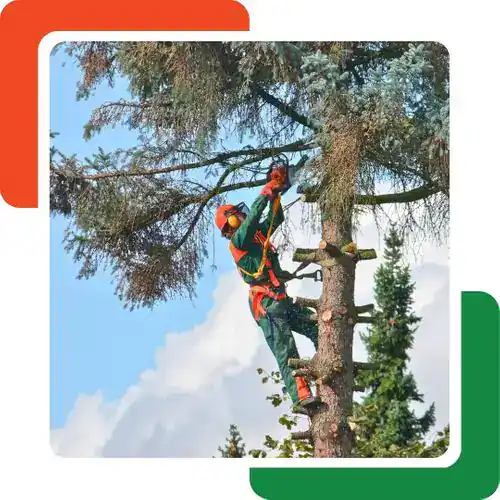
Professional tree trimming isn’t just a guy with a saw. It starts with an assessment of the tree’s health. We make strategic cuts to improve airflow, remove hazards, and shape the tree for long-term survival. When we’re done, the tree should look “natural,” not like it survived a fight with a lawnmower.
Cleanup is part of the deal. We remove the debris and leave your yard cleaner than we found it. No dragging heavy limbs to the curb yourself. No piles of wood chips sitting in your driveway for three weeks. Just a healthier tree and a safer home. If you’re ready to stop worrying about that big branch and start protecting your property, we can help. Reach out for an assessment before that branch makes its own “landing” arrangements.
Summary:
Share: