
Your local, professional, and reliable partner for all your tree service needs.
Contact Info
Your local, professional, and reliable partner for all your tree service needs.
Contact Info
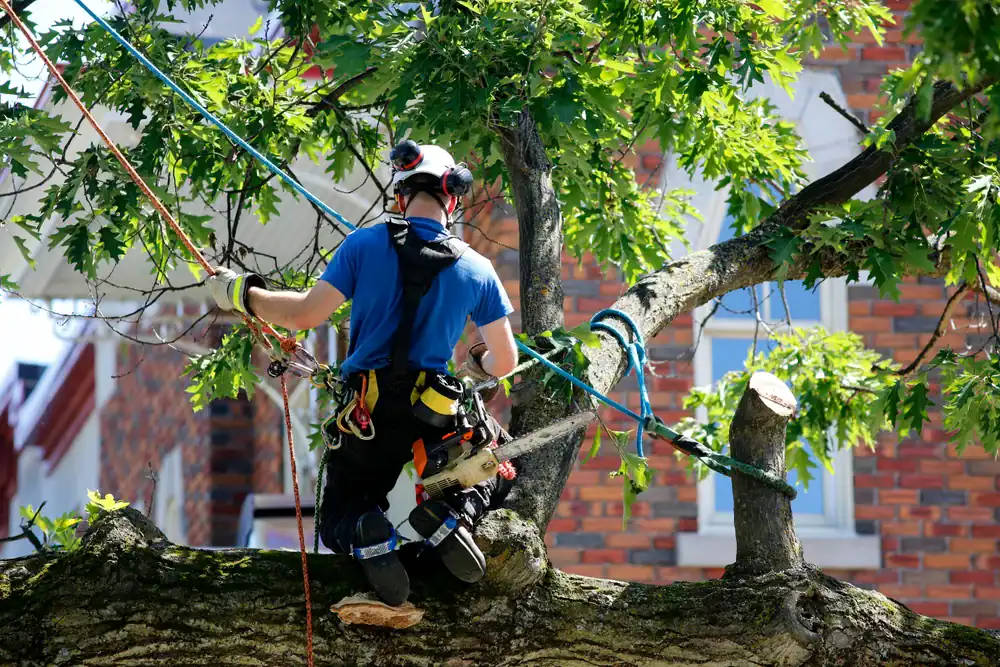
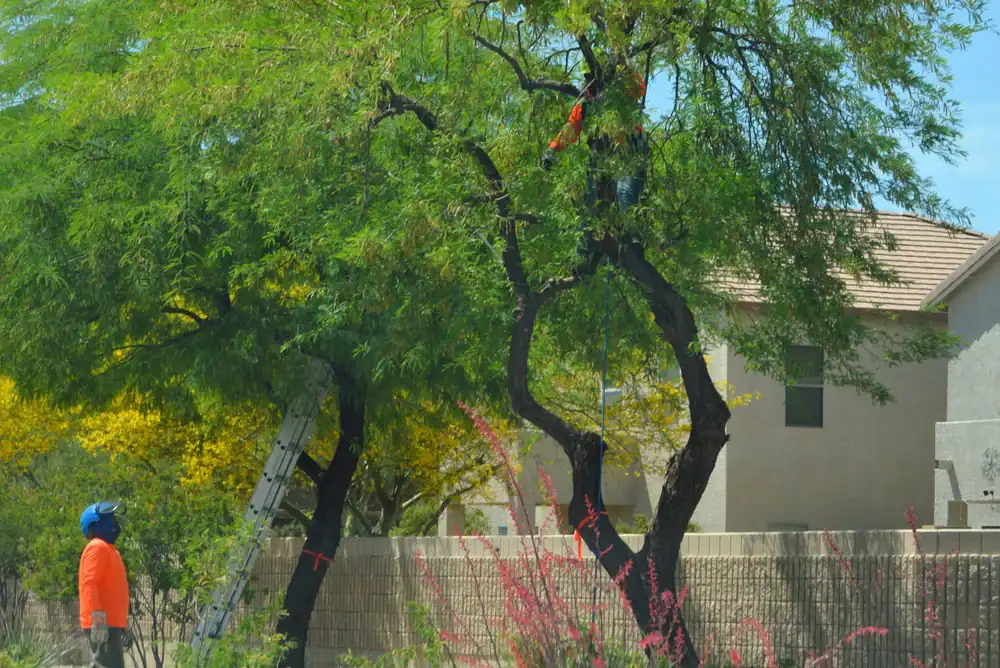
You stop worrying every time the forecast shows storms rolling through Cherokee County. Those tall pines leaning toward your roof aren’t keeping you up at night anymore. The branches scraping your siding during wind gusts are gone.
Your property looks cleaner. The canopy is balanced. Sunlight reaches your lawn again without losing the shade where you actually want it.
Insurance companies don’t flag your property for overgrown hazards. Roots aren’t cracking your driveway or foundation. And when the next storm hits Buffington, your trees bend instead of break because they’ve been pruned correctly and assessed by someone who knows what weak limbs look like before they fall.
That’s what regular tree maintenance does. It removes the variables that turn a windy afternoon into a claim, a cleanup, or worse.
We’ve been working in Buffington and throughout Cherokee County for over 20 years. We’re a local, family-run tree care company with ISA certified arborists on staff and full licensing and insurance coverage.
We know how Buffington’s clay soil affects root systems. We’ve seen what summer heat stress does to oaks and maples here. We’ve responded to storm damage from every major weather event that’s hit this area in the past two decades.
That experience means we’re not guessing when we assess your trees. We know what thrives here, what struggles, and what needs to come down before it becomes a liability. And we handle the work with equipment that gets the job done safely without tearing up your yard.

It starts with a free estimate. You show us what you’re dealing with—whether it’s a tree that needs removal, limbs hanging over your house, or you’re just not sure if something is healthy. We assess the situation, explain what we’re seeing, and give you a clear price with no surprises.
Once you’re ready to move forward, we schedule the work around your availability. Our crew shows up on time with the right equipment for the job—whether that’s crane-assisted removal for large trees near structures or standard climbing and rigging for routine trimming.
We complete the work safely and efficiently. That means protecting your property, cutting precisely, and making sure nothing falls where it shouldn’t. When the job’s done, we handle complete cleanup. Every branch, log, and piece of debris gets hauled off. Your yard looks better than it did before we arrived.
If you’re dealing with storm damage and need to file an insurance claim, we can bill your insurance company directly and help you through that process.

Ready to get started?
Tree removal is the most common request we get in Buffington—especially after storm seasons when limbs come down or entire trees uproot in saturated clay soil. We handle removals of any size, including trees close to homes, power lines, or structures where precision matters.
Tree trimming and pruning keep your canopy healthy and your property safe. We remove dead or weak branches, thin out dense growth that catches wind, and shape trees so they’re balanced and less likely to split during storms. In Buffington, where summer heat stresses trees and winter ice loads branches, regular pruning makes a measurable difference.
Stump grinding removes what’s left after a tree comes down. Stumps attract pests, create tripping hazards, and make mowing a hassle. We grind them below grade so you can replant, lay sod, or just reclaim that space.
Emergency tree services are available 24/7. When a tree falls on your house, blocks your driveway, or creates an immediate safety risk, we respond fast. Storm damage doesn’t wait for business hours, and neither do we.
Tree health assessments from our certified arborists identify problems before they become expensive. We check for disease, pest damage, structural weaknesses, and root issues that affect stability—especially important in Buffington’s heavy clay soil where drainage problems can compromise root health.
Buffington itself doesn’t have its own tree removal ordinances since it’s an unincorporated community in Cherokee County. That means you’ll follow Cherokee County’s regulations, which are generally less restrictive than what you’d find in incorporated cities like Canton or Woodstock.
Cherokee County doesn’t require permits for most residential tree removals on private property. You can typically remove trees that are dead, diseased, hazardous, or just unwanted without going through a permitting process.
The exceptions are if the tree is in a protected area, part of a conservation easement, or if your property is in a subdivision with HOA rules that restrict tree removal. Some HOAs in Cherokee County require approval before you remove certain trees, especially large hardwoods or specimens that affect the neighborhood’s appearance. Check your HOA covenants if you’re in a planned community.
If you’re unsure, we can help you figure out what applies to your property during the estimate.
Tree removal costs in Buffington typically range from $300 for small trees under 30 feet to $3,000+ for large trees over 80 feet or trees in difficult locations near structures or power lines.
The price depends on the tree’s size, location, and complexity. A tree in an open yard with clear drop zones costs less than one wedged between your house and your neighbor’s fence. Trees that require crane-assisted removal or piece-by-piece rigging cost more because of the equipment and time involved.
Stump grinding usually adds $100 to $400 depending on the stump’s diameter and root system. If you’re removing multiple trees at once, the per-tree cost often drops because we’re already on-site with equipment mobilized.
Emergency storm damage removal can cost more due to the urgency and safety risks involved, but if the tree fell due to a covered event, your homeowner’s insurance may cover the removal cost. We can bill insurance directly and help you navigate that process.
We provide free estimates, so you’ll know exactly what the job costs before we start any work.
Late winter to early spring—typically February through early April—is the best time for most tree trimming in Buffington. Trees are dormant, which means they’re not actively growing and won’t lose sap or energy from pruning cuts. You can also see the tree’s structure more clearly without leaves blocking your view of weak or crossing branches.
Trimming during dormancy reduces stress on the tree and minimizes the risk of disease or pest infestation since insects and pathogens are less active in cooler months. Wounds close faster once growth resumes in spring.
That said, dead or hazardous branches should be removed immediately regardless of season. If a limb is cracked, hanging, or clearly dead, waiting until the “right” time increases the risk of it falling during a storm.
Summer trimming is fine for light maintenance or shaping, but avoid heavy pruning during peak heat since it stresses trees that are already working hard in Buffington’s humid, hot summers. Fall trimming is generally discouraged because fresh cuts before winter can leave trees vulnerable to cold damage and decay.
If you’re not sure what your trees need or when to schedule it, we can assess them and recommend the right timing based on species and condition.
Visible lean is one of the clearest signs, especially if the lean is recent or increasing. Trees naturally grow at slight angles, but if a tree that used to be upright is now leaning toward your house or driveway, the root system may be failing—common in Buffington’s clay soil after heavy rain saturates the ground.
Large dead branches in the canopy are another red flag. Dead wood is brittle and unpredictable. It can snap off without warning during wind or storms, and if those branches are over your roof, driveway, or where people walk, they’re a liability.
Cracks or splits in the trunk indicate structural failure. If you see vertical cracks, seams, or sections of bark separating from the wood, the tree is losing its ability to support its own weight. These trees often fail suddenly, especially during storms.
Root damage or decay at the base is harder to spot but just as dangerous. Look for mushrooms or fungal growth around the trunk base, exposed roots that are soft or crumbling, or soil that’s heaving or sinking near the tree. These are signs the root system is compromised.
Hollow trunks or cavities reduce the tree’s structural integrity. Some trees can survive with hollow sections, but if more than a third of the trunk is hollow or decayed, removal is usually the safer option.
If you’re seeing any of these signs, have a certified arborist assess the tree. We can tell you whether it’s manageable with trimming or cabling, or if removal is the right call before it becomes an emergency.
Yes, tree roots can damage foundations and plumbing in Buffington, especially given the area’s heavy clay soil. Clay expands when wet and contracts when dry, and large tree roots pulling moisture from the soil near your foundation can cause that soil to shrink unevenly, leading to foundation cracks or settling.
The trees most likely to cause foundation problems are large species with aggressive root systems planted too close to structures—things like willows, poplars, silver maples, and sweetgums. If a mature tree is within 20 feet of your foundation and you’re seeing cracks, uneven floors, or doors that stick, roots may be contributing to the problem.
Roots don’t usually break through solid, intact plumbing pipes. But if you have older clay or cast iron sewer lines with existing cracks or loose joints, roots will find their way in. Once inside, they grow and expand, eventually clogging or collapsing the pipe. Tree roots are one of the most common causes of sewer line backups in older Buffington homes.
If you’re planting new trees, keep large species at least 20 to 30 feet from your foundation and sewer lines. If you already have large trees close to your house and you’re concerned, we can assess the root system and recommend whether removal, root pruning, or barriers make sense.
In some cases, removing the tree is the only way to prevent ongoing damage, especially if roots have already infiltrated plumbing or are visibly affecting your foundation.
Yes. Storm damage is one of the most common calls we get in Buffington, especially after severe weather moves through Cherokee County. We offer 24/7 emergency tree services, so if a tree falls on your house, garage, or blocks your driveway, we respond quickly to remove the hazard and secure your property.
We also work directly with insurance companies. If the tree damage is covered under your homeowner’s policy—which it usually is if the tree fell due to wind, lightning, or storm conditions—we can bill your insurance company directly. That means you’re not paying out of pocket upfront and waiting for reimbursement.
We’ll document the damage, provide the necessary photos and details your insurance adjuster needs, and handle the communication with your carrier throughout the claims process. We’ve done this hundreds of times, so we know what insurers require and how to make the process as smooth as possible for you.
Keep in mind that insurance typically covers tree removal only if the tree damaged a structure or is blocking access to your home. If a tree falls in your yard but doesn’t hit anything, most policies won’t cover removal. We can walk you through what’s likely covered during the estimate.
Whether it’s an insurance job or not, our priority is getting the tree off your property safely and fast, and making sure your home is protected from further damage.
Other Services we provide in Buffington