Your local, professional, and reliable partner for all your tree service needs.
Contact Info
Your local, professional, and reliable partner for all your tree service needs.
Contact Info
That leftover stump isn't just sitting there. It's creating problems you can't always see—and grinding it out might be the best decision you make for your yard this year. Because your mower deserves better.
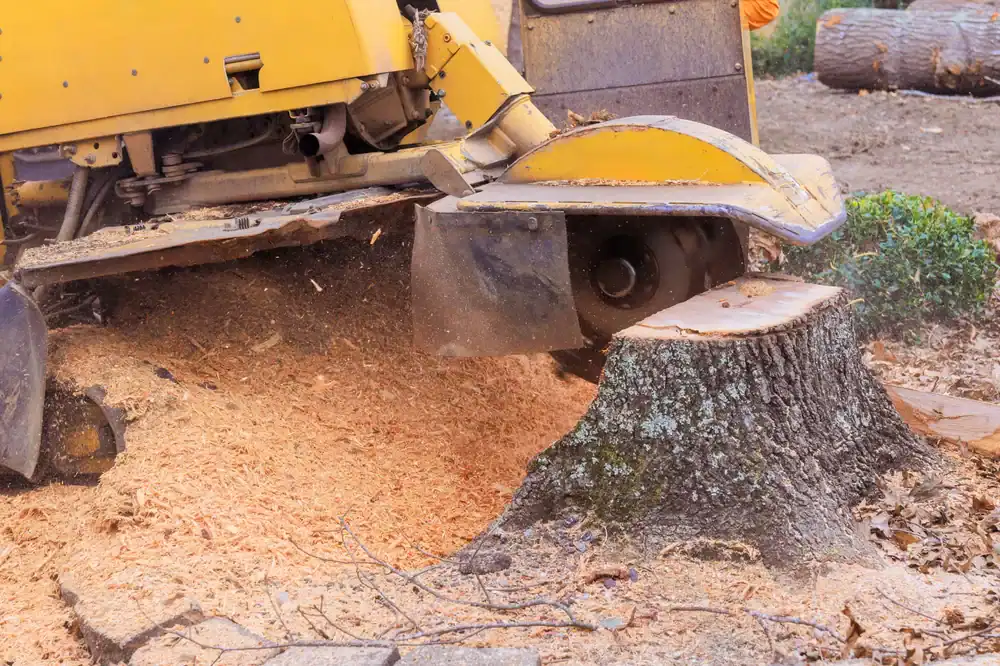
Stump grinding is a mechanical process that uses specialized tools to break down a tree stump into wood chips. A stump grinder features a rotating cutting wheel fitted with carbide teeth that shreds the stump and grinds it several inches below ground level. Imagine a giant, angry pac-man for wood—that’s basically the vibe. The machine can handle stumps of virtually any size, from small ornamental trees to massive oaks.
The process is surprisingly effective. Most residential stump grinding jobs take just a few hours from start to finish. The grinder reduces the stump to mulch-like wood chips that can either be left on-site for landscaping use or hauled away. It’s the most satisfying “magic trick” in the tree industry—now you see it, now you have a pile of mulch.
What makes stump grinding different from full stump removal is what it leaves behind. The process eliminates the visible portion and the top roots, but the deeper roots remain underground to decay naturally. This minimizes disruption to your yard, so you don’t end up with a hole the size of a swimming pool in your lawn.
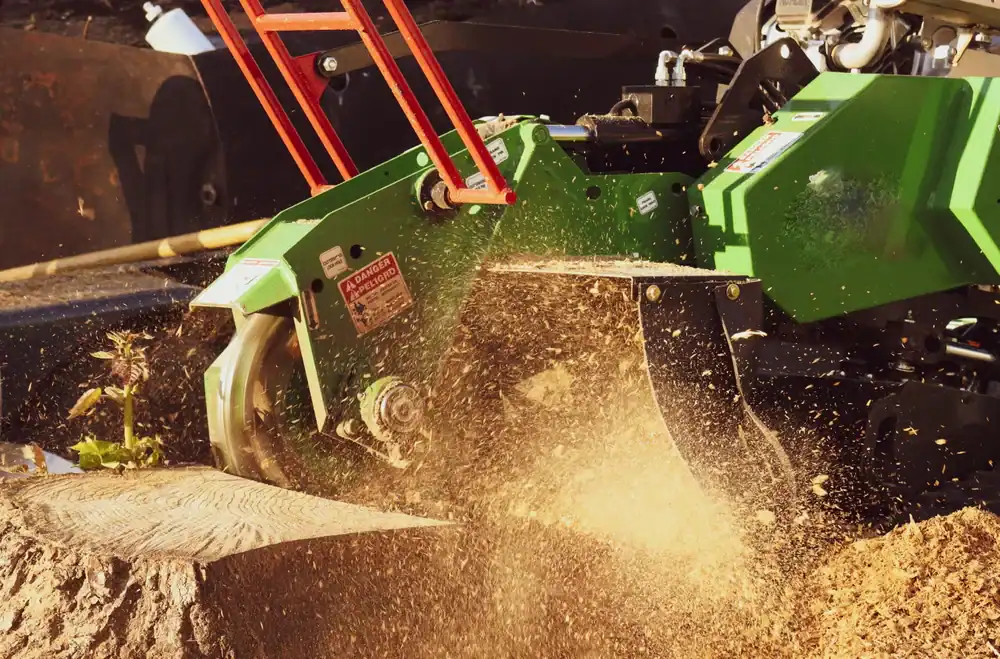
The standard depth for stump grinding ranges from 4 to 12 inches below the soil surface. This is usually enough to cover the area with soil and grass. For most homeowners in Cherokee, GA, this depth works perfectly for lawn restoration. Basically, deep enough that your mower won’t have a near-death experience.
Depth matters depending on your plans. Grinding 4 to 6 inches is fine for grass. But if you’re planning to build a patio, install a garden bed, or plant a new tree in that exact spot? You’ll want to go 10 to 12 inches deep. This guarantees you won’t hit old roots when you’re digging for your new projects. Nothing ruins a “Zen Garden” faster than hitting a buried oak root with a shovel.
Once the grinding is done, you’re left with a pile of wood chips. These chips are a byproduct, and you have options. Many homeowners use them as free mulch for garden beds. They help retain moisture, suppress weeds, and look great around your other trees. It’s like the tree is giving you a parting gift for your flower beds.
You can also mix them with topsoil to fill the hole. Just remember that wood chips settle as they decompose, so you might need a “top-off” of soil in a year or two. Unless your tree was diseased or infested with pests. If it was, don’t use those chips! Pathogens can spread to your healthy plants, which is the landscaping equivalent of inviting a termite to an all-you-can-eat wood buffet.
Want live answers?
Connect with a Tree Service 4 U expert for fast, friendly support.
A stump sitting in your yard isn’t neutral. It’s actively creating problems. Stumps are major tripping hazards, especially for kids and pets. They’re also obstacles for lawn equipment—hit one with a mower and you’re looking at blade damage or worse. Your lawnmower is for grass, not for trying to win a fight against a 50-year-old oak stump.
Then there’s what you can’t see. Old stumps become magnets for pests like termites, carpenter ants, and beetles. These insects set up shop in the rotting wood, and once the population grows, they start looking for new territory—like your deck or your home’s foundation. Stump grinding is basically an eviction notice for every termite in the neighborhood.

First impressions matter. A yard dotted with old stumps suggests neglect and can raise questions for potential buyers. “If they didn’t take care of the dead tree, what’s happening with the plumbing?” Curb appeal directly impacts property value in Cherokee County’s competitive real estate market.
Visual impact extends beyond the stump itself. Stumps often sprout new growth—small, ugly shoots that keep popping up no matter how many times you cut them back. It’s the “zombie tree” effect. Grinding stops this cycle. It also opens up space for that patio or flower bed you’ve been dreaming of. Cherokee homeowners take pride in their yards, and grinding is a straightforward way to keep yours looking professional.
Rotting wood is an open invitation to pests. Termites and carpenter ants love moist, decaying stumps. Once they establish a colony, they don’t stay confined; they spread to your fence, shed, or foundation. By the time you notice them, the damage is already expensive.
Then there’s regrowth. Persistent shoots drain nutrients and water from your soil, making your grass struggle. Underground roots present their own challenges, too. They can continue to grow, seeking water and potentially cracking foundations or lifting sidewalks. Root damage is a slow-motion disaster for your concrete. Stump grinding addresses these problems by removing the food source for pests and stopping regrowth at the source.
Stump grinding isn’t complicated, but it does require the right equipment. Most homeowners find professional service is worth it when you factor in the physical difficulty and rental costs. The benefits are clear: improved safety, better curb appeal, and more usable yard space. Plus, you finally get to mow your lawn in a straight line again.
If you’re ready to reclaim your yard and eliminate those stubborn stumps, we can help. Professional stump grinding gives you back your outdoor space and protects your property from hidden problems.
Summary:
Share: