Your local, professional, and reliable partner for all your tree service needs.
Contact Info
Your local, professional, and reliable partner for all your tree service needs.
Contact Info
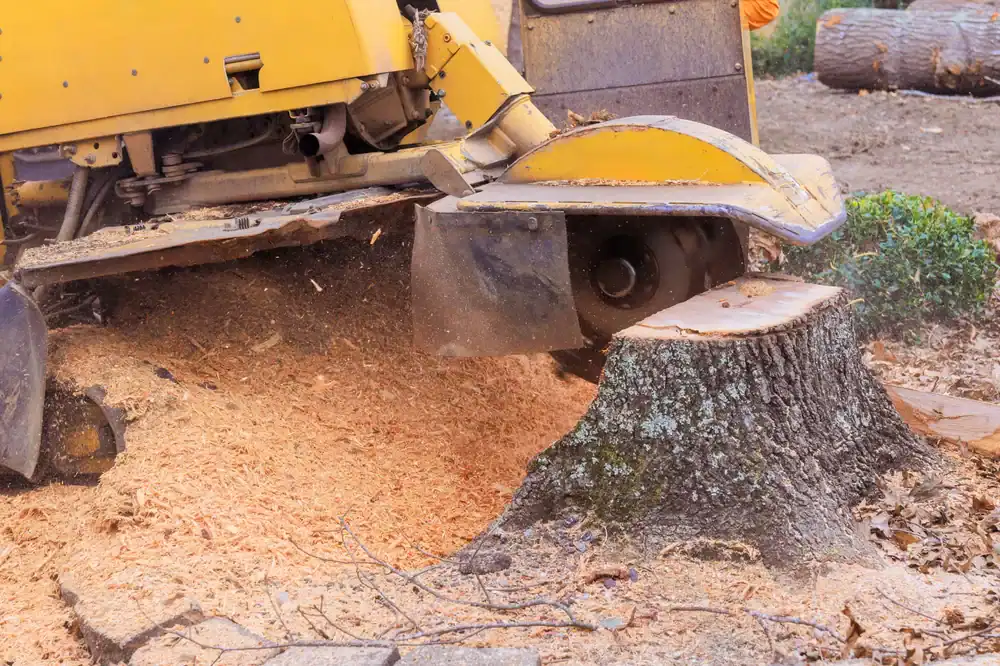
Stump grinding leaves you with a hole and enough wood chips to host a hamster convention. Here's how to actually restore your lawn without the soil throwing a tantrum.
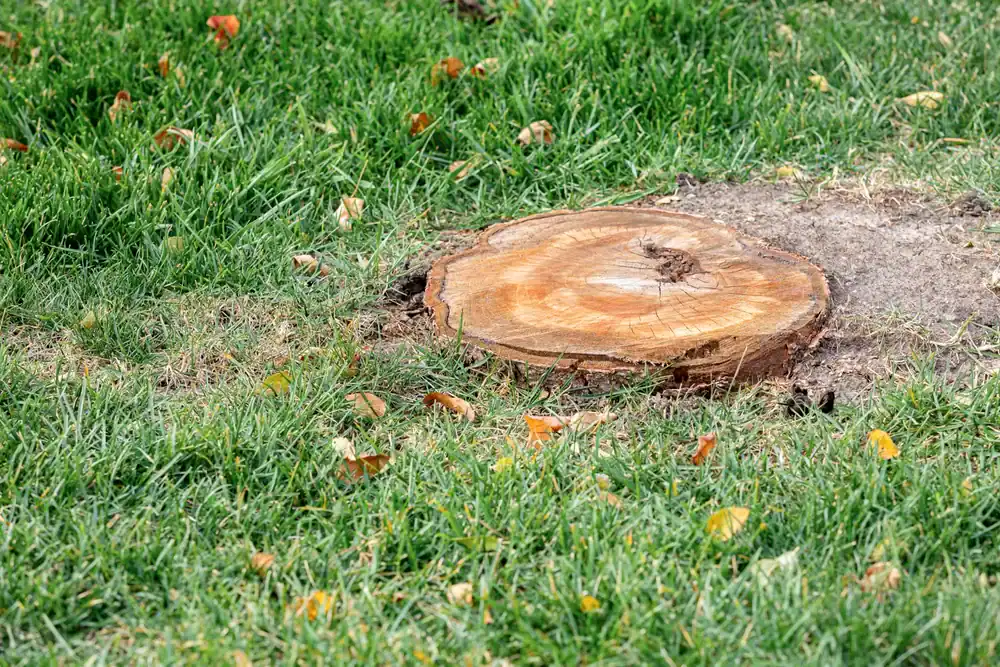
When a stump gets ground down, you aren’t just left with a hole; you’re left with a soil-based chemistry project. You’ve got wood chips, sawdust, and a root system that’s currently undergoing a slow-motion funeral underground. All that woody material creates a major buzzkill: nitrogen depletion.
Think of microorganisms like tiny construction workers. To break down those wood chips, they need nitrogen for fuel. They’ll take it from anywhere they can get it—which means they’re stealing it right out of the mouths of your new grass seeds. If you plant too soon without a plan, your grass will come up yellow, weak, and essentially asking for a protein shake.
Then there’s the “Sinkhole Factor.” As those old roots decay over the next few years, the ground is going to settle. If you don’t prep the area, your perfectly level lawn will eventually look like a miniature golf course—minus the fun windmills.

Nitrogen is the secret sauce that keeps your lawn looking like a golf course and not a wasteland. When you grind a stump, you’ve essentially dumped a massive “carbon bomb” into the soil. Bacteria and fungi rush in to eat the carbon, but they need nitrogen to do it.
This is called nitrogen immobilization, or as we like to call it, “The Great Nitrogen Heist.” These microbes will beat your grass to the nutrients every single time. It’s like trying to share a pizza with a teenager—you’re not getting a slice.
In Cherokee, GA, we already deal with that famous “Georgia Red Clay,” which is basically nature’s way of testing our patience. After a tree removal, the soil can become even more acidic.
Most grass varieties prefer a neutral pH (6.0 to 7.0). If your soil is too acidic, your new grass will have the root strength of a wet noodle.
Pro-tip: Spend the $15 on a soil test kit. It’s the cheapest “insurance” you’ll ever buy. If the test says your soil is as sour as a lemon, add some limestone. If it’s too alkaline, hit it with some iron sulfate. Don’t skip this, or you’ll be staring at a dirt patch for another season.
Want live answers?
Connect with a Tree Service 4 U expert for fast, friendly support.
Preparation is the difference between a lush lawn and a patch of weeds that looks like it belongs in a haunted house. You cannot simply dump a bag of topsoil into a pile of sawdust and expect a miracle.
First, clear the debris. We know, it’s a pain. But those wood chips are great for flower beds, not for your lawn. Shovel them out until you see real dirt. Once the hole is cleared, fill it with high-quality topsoil. Not the “99-cent mystery dirt” from a bargain bin—get the good stuff with organic matter.

The hole from a stump grinder can be 12 inches deep, but the root system goes much deeper. As those roots rot, the soil will sink. This is the part where you have to be patient (we know, we hate it too).
Fill the hole, water it down to settle the air pockets, and wait a week. You’ll likely see a “bowl” form. Fill it again. Repeat this until the soil stops trying to stage a disappearing act. If you’re replanting a tree in the same spot, dig the new hole twice as wide as the root ball to give the new roots a “red carpet” experience through the old, compacted clay.
Growing grass over a former stump is like babysitting a very dramatic toddler. 1. Starter Fertilizer: Use a high-nitrogen starter formula. It’s the “Red Bull” your seeds need to compete with the wood-eating bacteria. 2. Don’t Bury the Lead: Grass seed shouldn’t be buried deep. Just a quarter-inch deep—think of it like a light blanket, not a burial. 3. Watering: This is where people fail. You need to keep the soil damp, not soaked. In Georgia’s summer heat, this might mean a light sprinkle twice a day. If the seed dries out, it’s game over. 4. Wait to Mow: Don’t get trigger-happy with the lawnmower. Let that grass get 3 or 4 inches tall before you give it its first haircut.
Replanting after stump grinding doesn’t have to be a mystery or a disaster. It just takes a little bit of science and a whole lot of nitrogen. Shovel out the chips, fix the pH, and feed the soil like it’s your favorite houseguest.
If you’re in Cherokee, GA, and the thought of shoveling wood chips makes your back ache just thinking about it, we’ve got you covered. We’ve been helping neighbors turn stump-filled craters into beautiful landscapes for years.
Ready to say goodbye to the chips and hello to the green? Give us a call, and let’s get your yard back on track—hamster-free!
Summary:
Share: